
Accessibility
What is accessibility in web design?
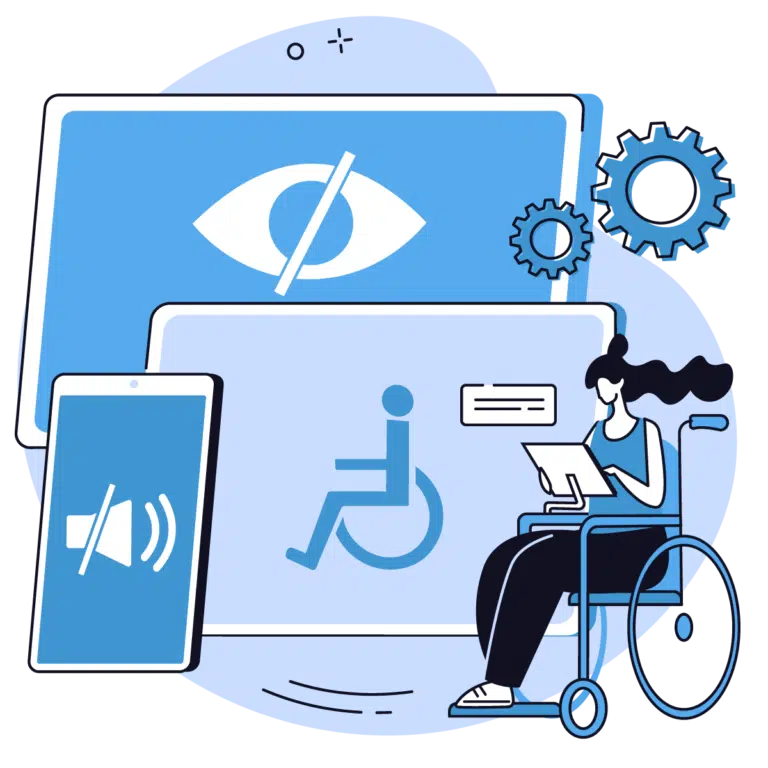
Web Accessibility
Accessibility in web design addresses a fundamental principle: ensuring everyone can use the website, regardless of their abilities, impairments, or limitations. Whether it's a temporary disability like a broken hand or a permanent condition like dyslexia, web accessibility aims to remove potential barriers and ensure equal access to information.
Web accessibility is all about making websites usable for all visitors. It involves following specific design principles to guarantee that individuals facing difficulties or limitations can have a similar experience to those who don't. This way, the content becomes accessible to every user.
According to the World Wide Web Consortium (W3C), which sets standards and guidelines for web development, web accessibility encompasses all disabilities affecting web access, including auditory, cognitive, neurological, physical, speech, and visual impairments. But it also benefits people without disabilities, such as those using mobile devices, older individuals with changing abilities, or people with temporary or situational limitations.
Why Web Accessibility Matters
Web accessibility isn't optional; it's a must-have. Prioritizing accessibility enhances the user experience for all visitors, including those with disabilities or limitations. It also demonstrates a commitment to inclusivity, showing visitors, leads, and customers that we value and care about them as individuals. In return, this investment will boost brand loyalty and advocacy.
The Four Principles of Web Accessibility
1
Perceivable:
Ensuring that visitors can perceive and understand the content. Considering users who are blind or have low vision and may rely on screen readers.
2
Operable:
Designing websites that can be used seamlessly by all visitors, without disruptions. Keep the site simple and free from unnecessary complexities that could hinder users with disabilities.
3
Understandable:
Making content and website structure easy to understand. Clarity in language and navigation benefits everyone.
4
Robust:
Ensuring that content can be interpreted by all, including those using assistive technologies.
Designing Websites for Everyone
While not legally required, making a website as accessible as possible is wise. Prioritizing accessibility standards in site designs can create a positive user experience and enhance customer loyalty.
For more information about Web Content Accessibility Guidelines (WCAG) 2 requirements, visit W3C's quick reference.
By ensuring a site is accessible, we are doing the right thing for the people who matter most to your business — your visitors and customers.